HPLC Method for Analysis of Tebuconazole on Alltesta™ Gradient
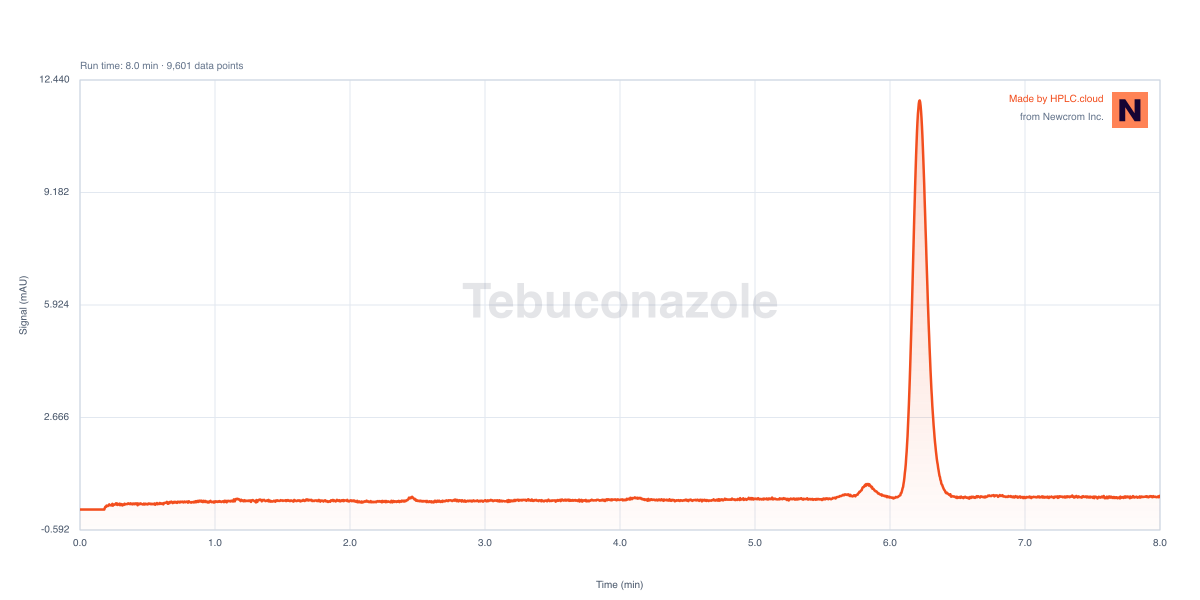
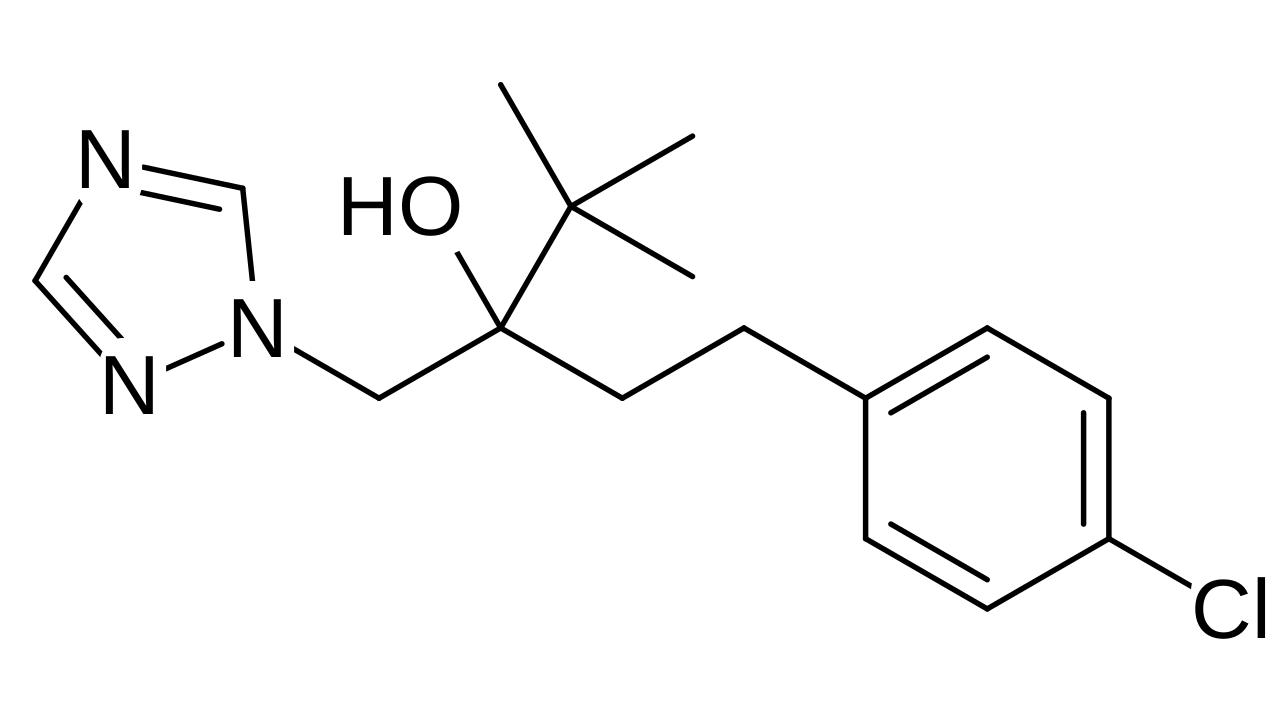
Tebuconazole is a triazole fungicide with the chemical formula C16H22ClN3O. It is used against to plant pathogenic fungi. Despite the U.S. Food and Drug Administration considering this fungicide safe, it is considered a possible carcinogen with the rating of C. According to the World Health Organization, it has moderate toxicity and is slightly hazardous. Tebuconazole can be retained and analyzed using the Newcrom B stationary phase column. The analysis utilizes an isocratic method with a simple mobile phase consisting of water and acetonitrile (MeCN) with ammonium formate as a buffer. Detection is performed using UV.
Frequently Asked Questions: HPLC Method for Analysis of Tebuconazole on Alltesta™ Gradient
What analyte does the HPLC Method for Analysis of Tebuconazole on Alltesta™ Gradient cover?
The HPLC Method for Analysis of Tebuconazole on Alltesta™ Gradient is designed for Tebuconazole, a pesticide compound. Tebuconazole is a triazole fungicide with the chemical formula C16H22ClN3O.
Which column and mobile phase are required for Tebuconazole analysis?
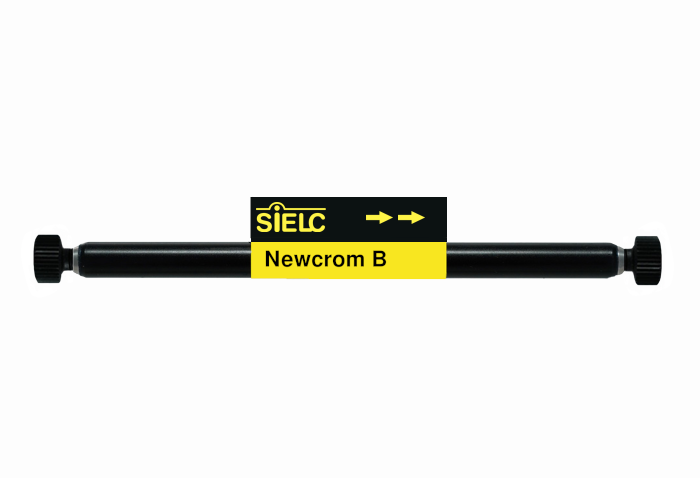
Run the separation on Newcrom B (4.6 x 150 mm, 5 um, 100 A, dual ended), SKU NB-46.150.0510. Typical mobile phase: MeCN, 50% 50% AmFm pH 3.0- 20 mM; H2O 50%.
What instrument conditions should I use for the HPLC Method for Analysis of Tebuconazole on Alltesta™ Gradient?
Operate on Alltesta™ Gradient with UV, 275 nm. Flow rate: 1. Injection volume: 5. Run time: 8.